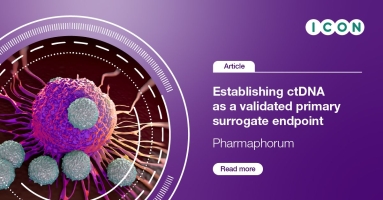




From MS to NMOSD to early Alzheimer's disease, neurologic mAbs are delivering proven clinical benefit. But as efficacy becomes less of a differentiator, what determines whether these therapies reach patients? In this art...
ICON experts frequently author or contribute to industry trade press.
Filter media
Filter media articles by either clicking within the ‘Category’ drop-down list, or begin typing which will automatically match to the nearest available category. Note - not all categories will display results if selecting a particular year.
-

Real-World Evidence in transition: CRO adaptation to the European Health Data Space framework
This article explores how the European Health Data Space (EHDS) is transforming real-world evidence generation by shifting CROs from data custodians to regulated data users operating within secure, interoperable environments, creating new opportunities for pan-European research while requiring greater investment in compliance, data standardisation and methodological rigour.
-

June 2026 Medical/ Commercial Pulse Check
With the first EU JCAs finalized and CMS extending deadlines for its ambitious Medicaid international-pricing model, ICON and other industry leaders share how they are navigating the friction between global harmonization and local execution including the practical evolution of global pricing floors, the maturing role of AI agents, and the new reality of European access.
-

How digital health technologies are reshaping clinical development
Digital health technologies are rapidly becoming essential to clinical trial strategies as regulators and sponsors embrace them to streamline operations, reduce patient burden, and generate higher‑quality real‑world data.
-

Smarter strategies for systematic literature reviews
Conducting a high-quality, clinically relevant literature review can be challenging – it demands strategic thinking, methodological rigour and therapeutic expertise. ICON expert Rebecca Rozich explains why systematic literature reviews can be a powerful alternative to generating new data.
-

Mind the gap: The need for gender-specific outcome measurement
Women experience significantly more years of poor health than men due to delayed diagnoses and mischaracterized symptoms, despite living longer on average. This health disparity is rooted in systemic gaps in medical research and clinical trial design, particularly in how health outcomes are measured through Clinical Outcome Assessments (COAs).
-

AI-powered precision measures: A golden opportunity for clinical research
As the cost of developing new therapies continues to rise, pharma executives must turn to technologies that drive better insights into de-risked investments and produce operational efficiencies. AI-powered digital measures are being developed and validated to better define disease, patients, and drug efficacy.
-

Innovation and flexibility in long-term follow-up studies
Read insights from Harpreet Gill VP, Real World Solutions, on how sponsors can optimise their LTFU studies to be flexible and cost-effective, with strategic planning and innovation, overcoming challenges while capturing valuable data insights.
-

The future of RWD and RWE in healthcare decision-making: Applications of novel real-world data collection methods for healthcare decision-making
Read insights from Jennifer Eriksson, Divisional Principal, on the use of real-world evidence and real-world data to inform healthcare decision-making and provide patients with rapid access to innovative healthcare technology.
-

Validating COAs: Key steps for accurate and reliable clinical trial data
With the increasing adoption of COAs, the importance of standardization across training, collection, and implementation to ensure high quality and consistent data collection has become apparent in recent decades.
-

Say Hello to Flexible: Reimagining the Patient Journey
In this article, Adam Halbridge Clinical Trial Tokenisation Lead and Executive Director, describes how flexibility is reimagining the patient journey and rebalancing the workload for each stakeholder involved.